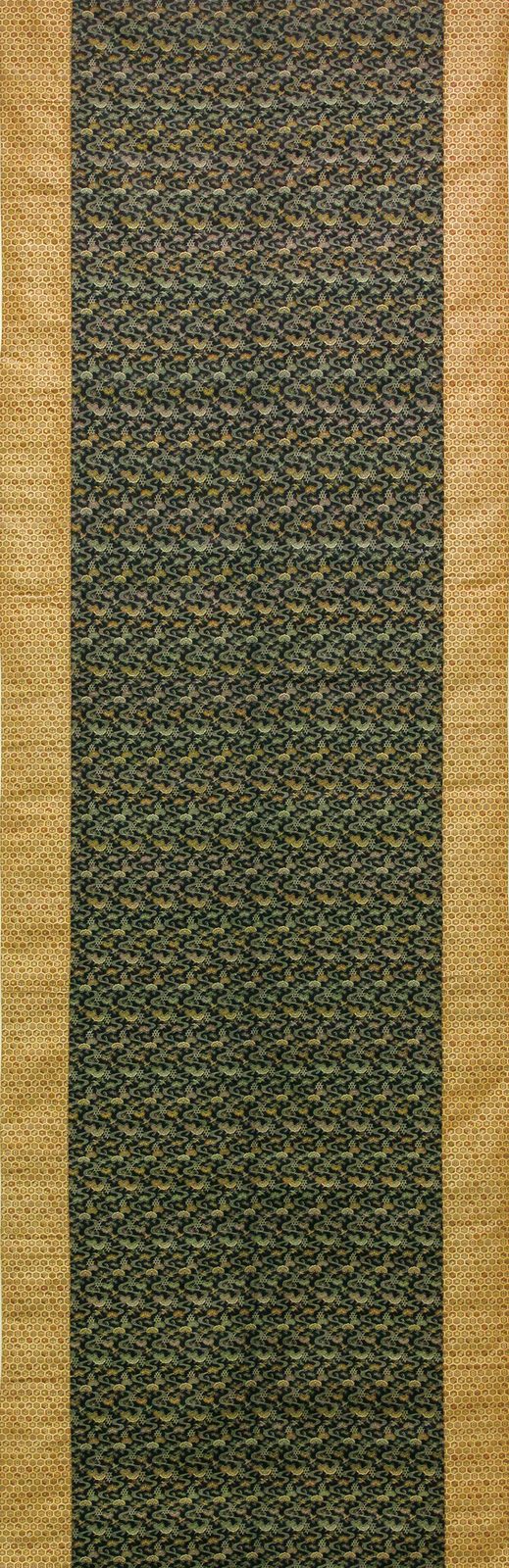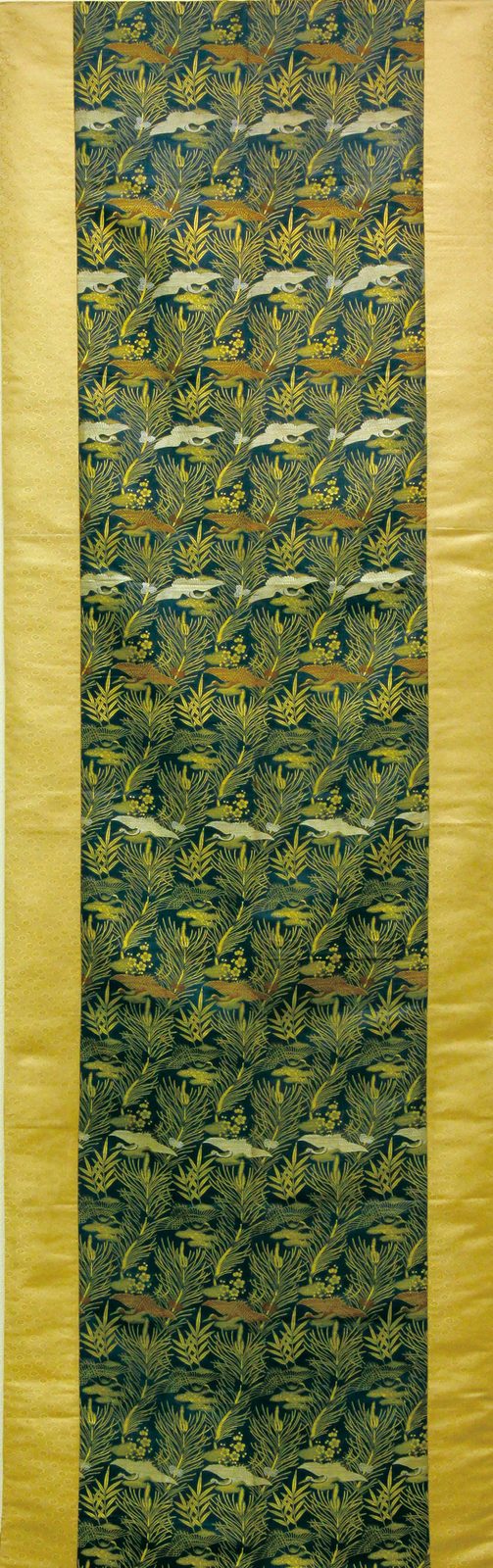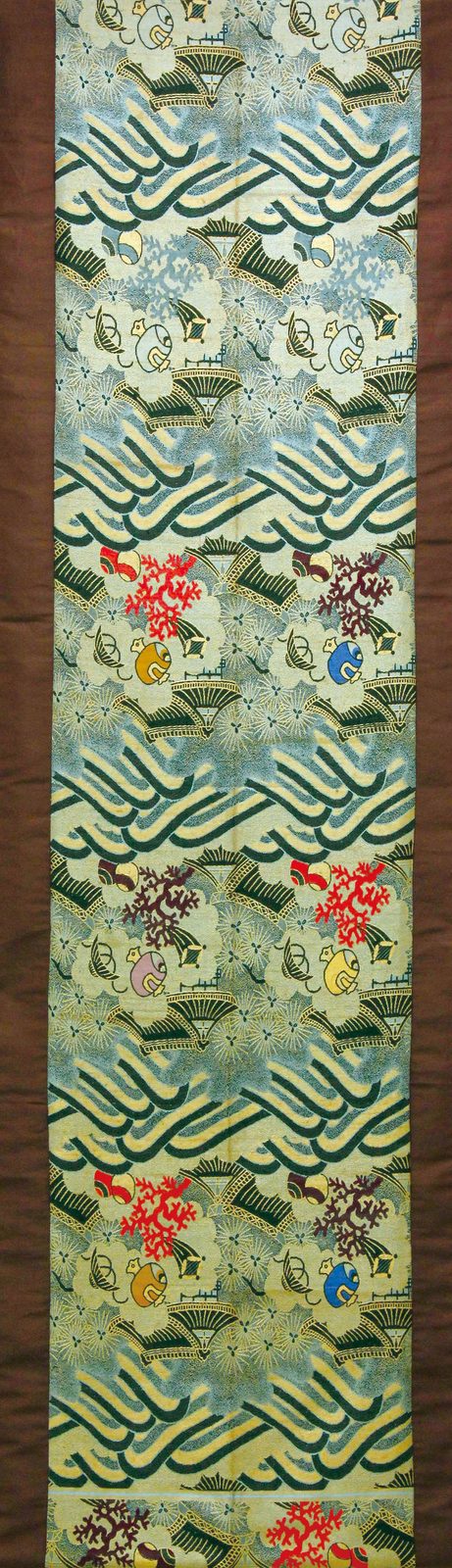
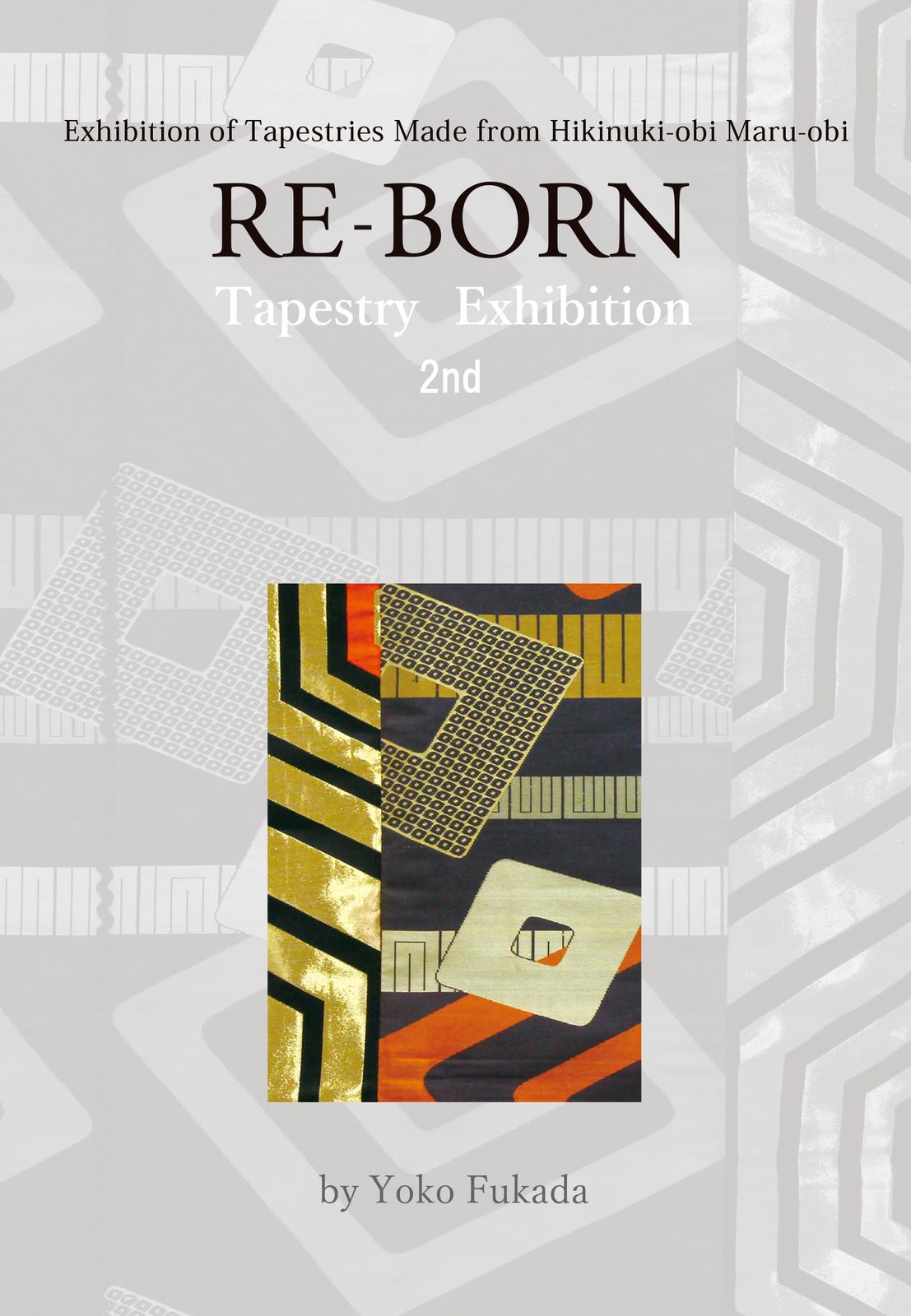
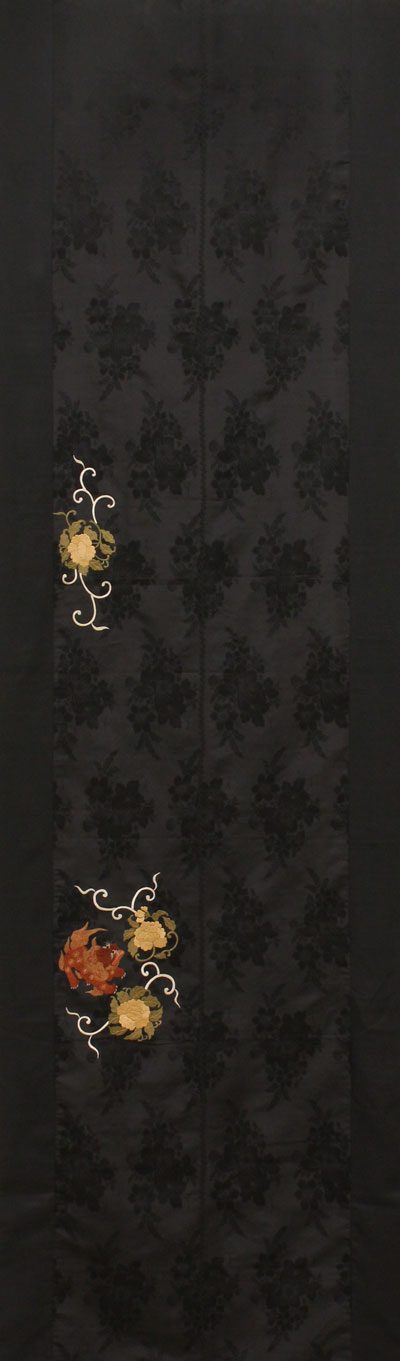
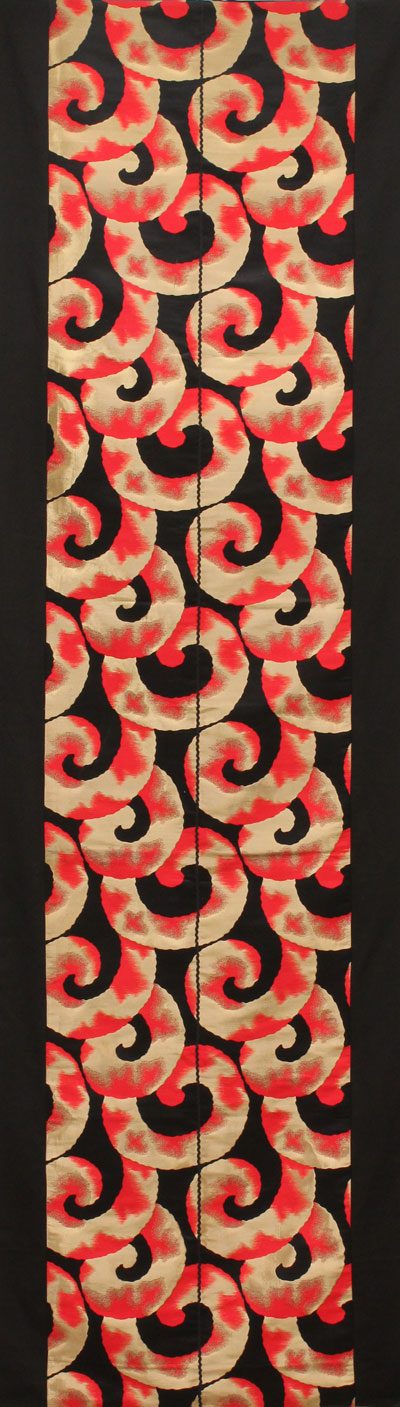
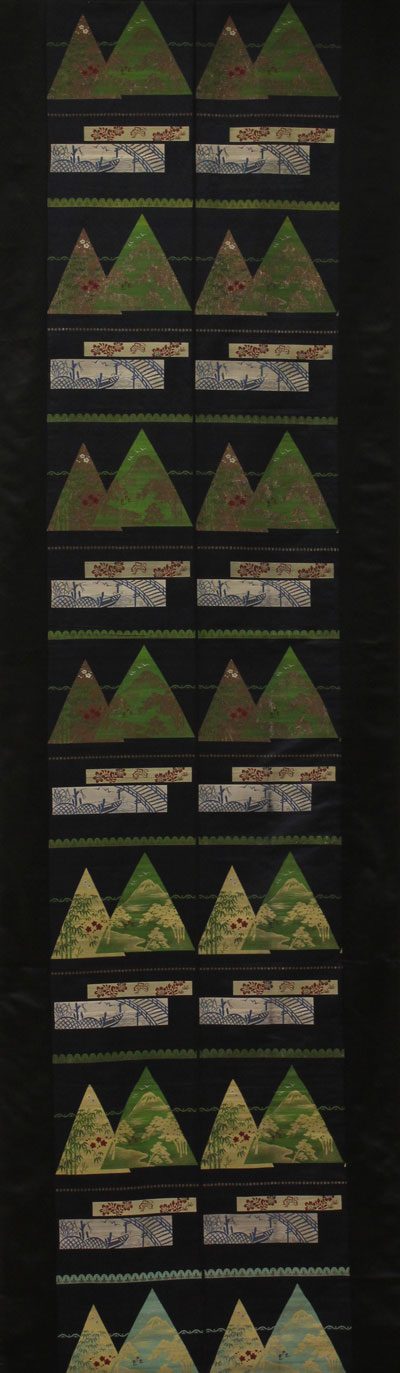
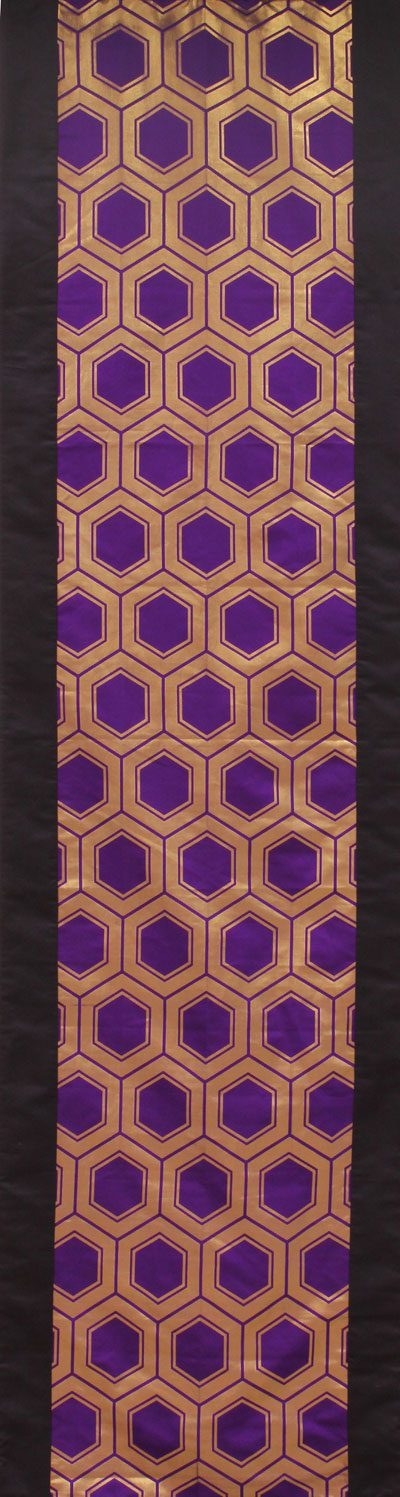
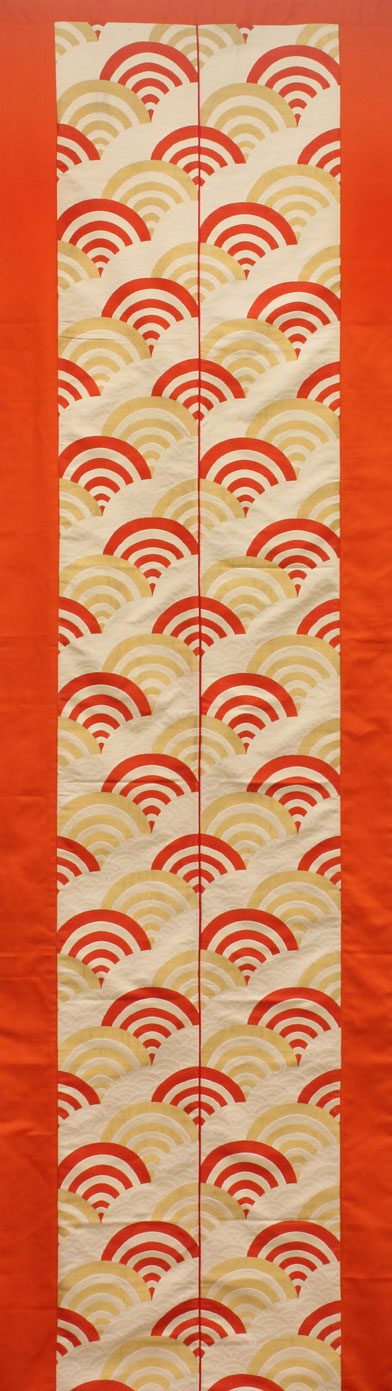
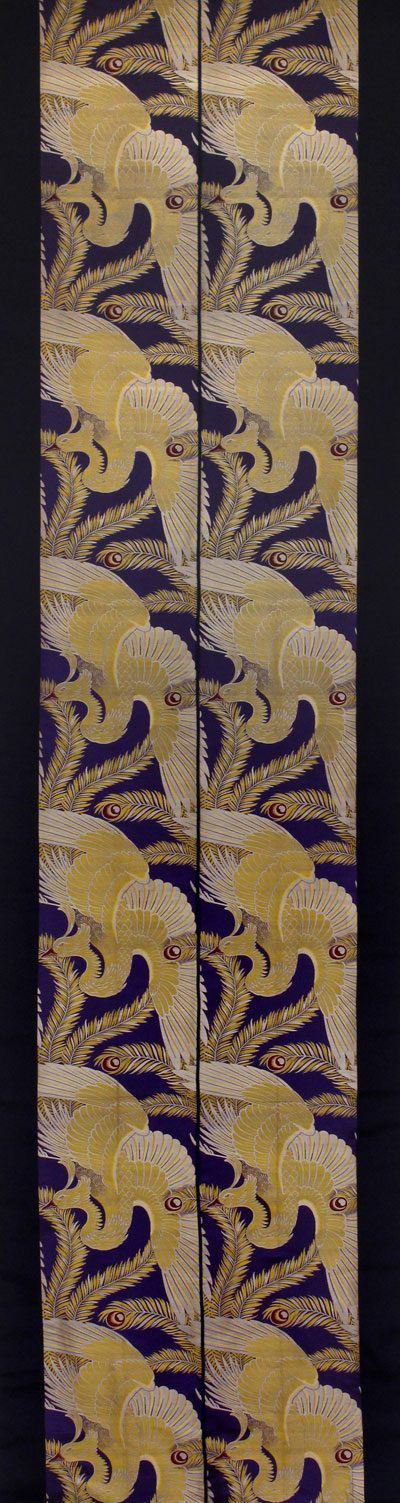
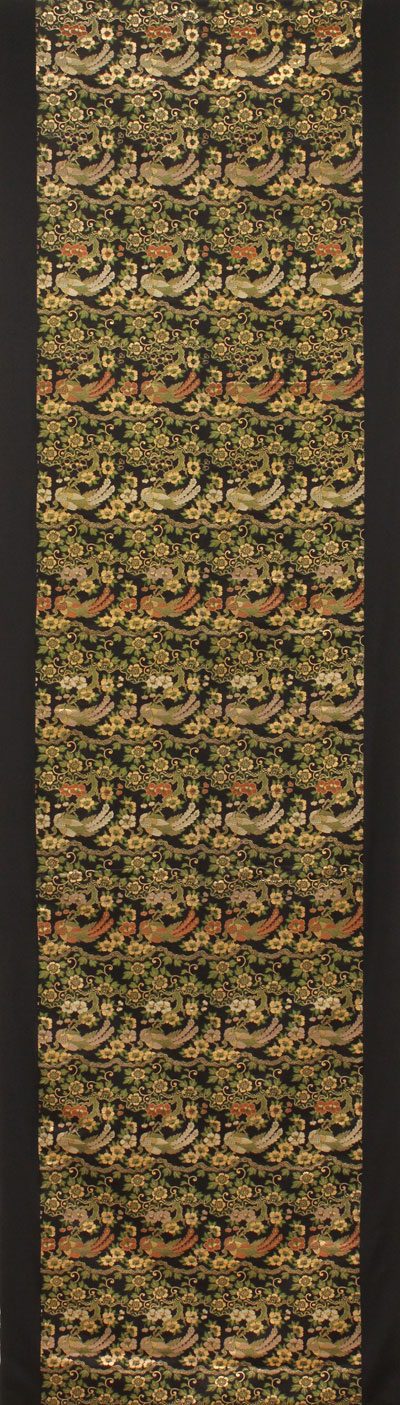
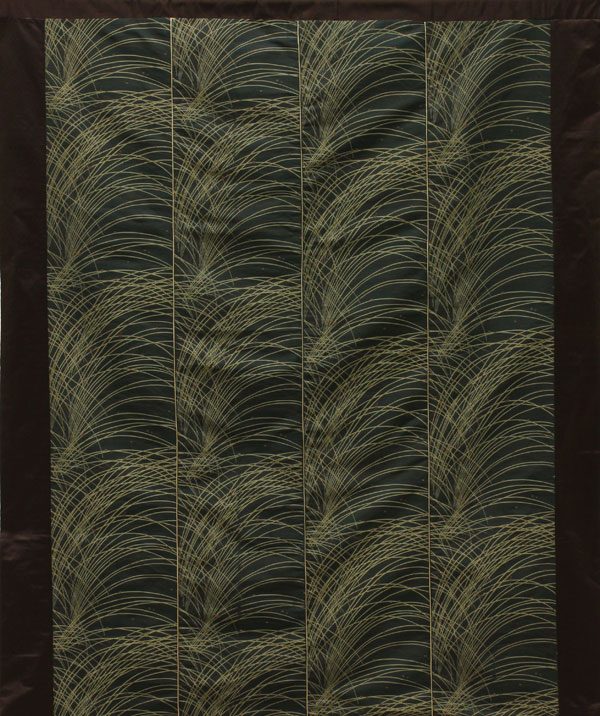
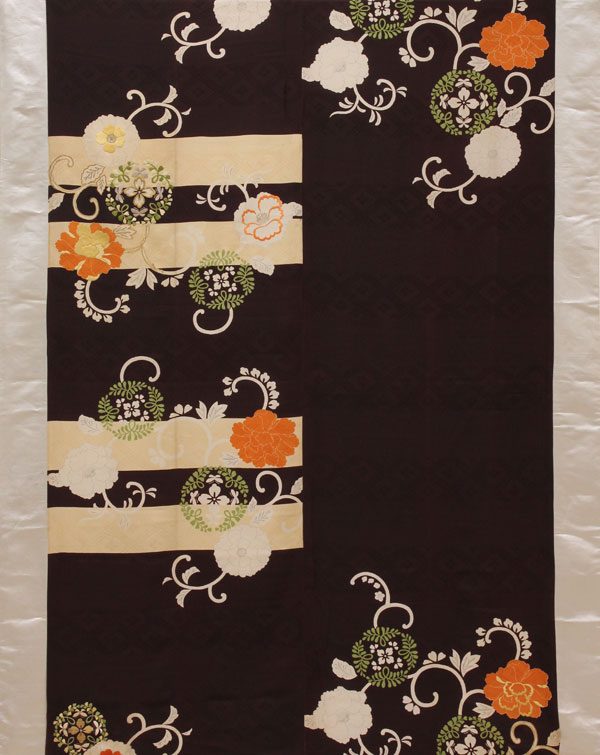
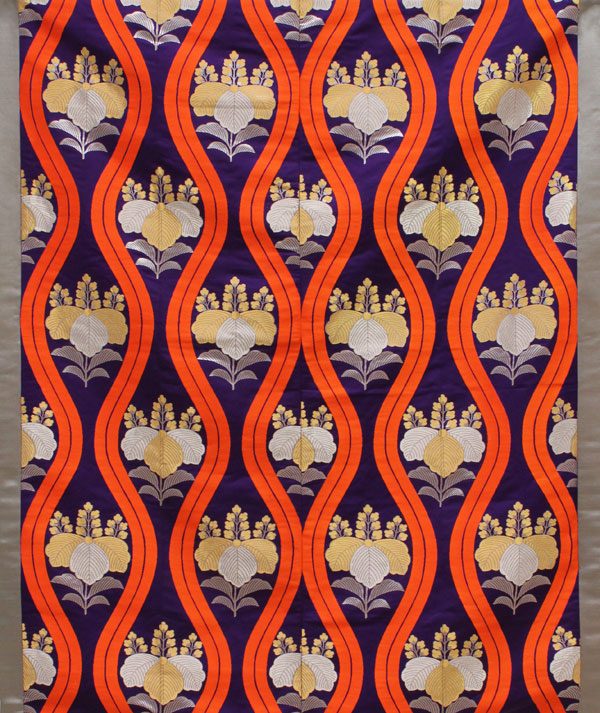
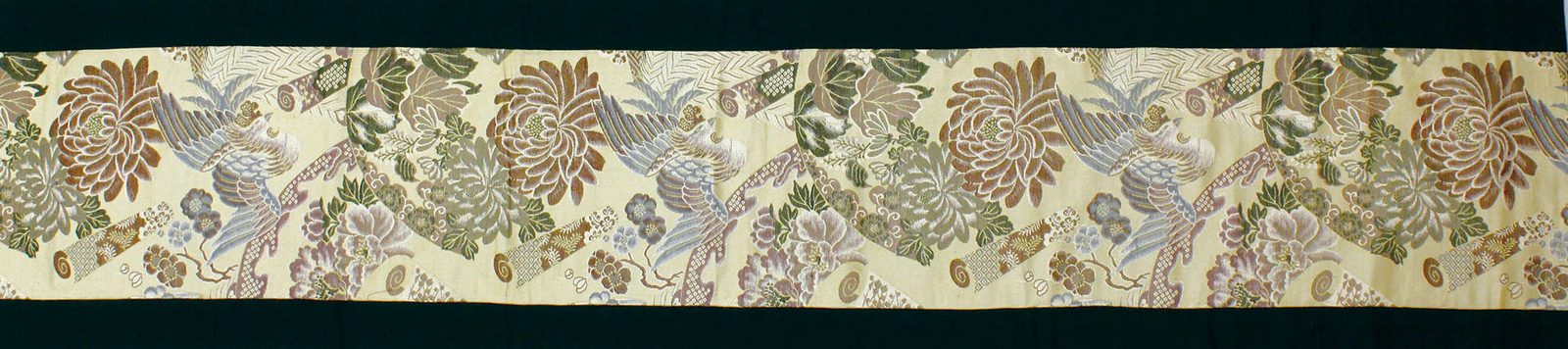
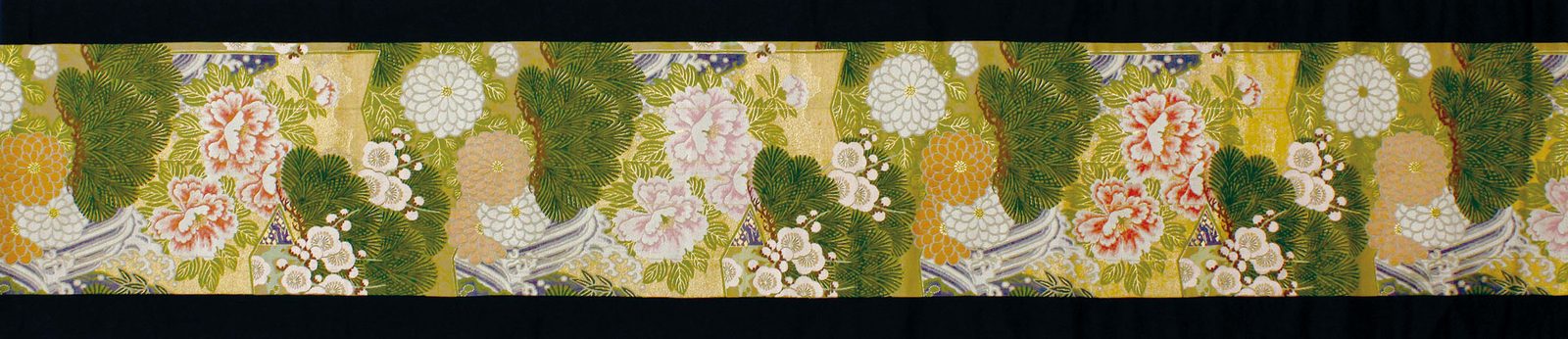
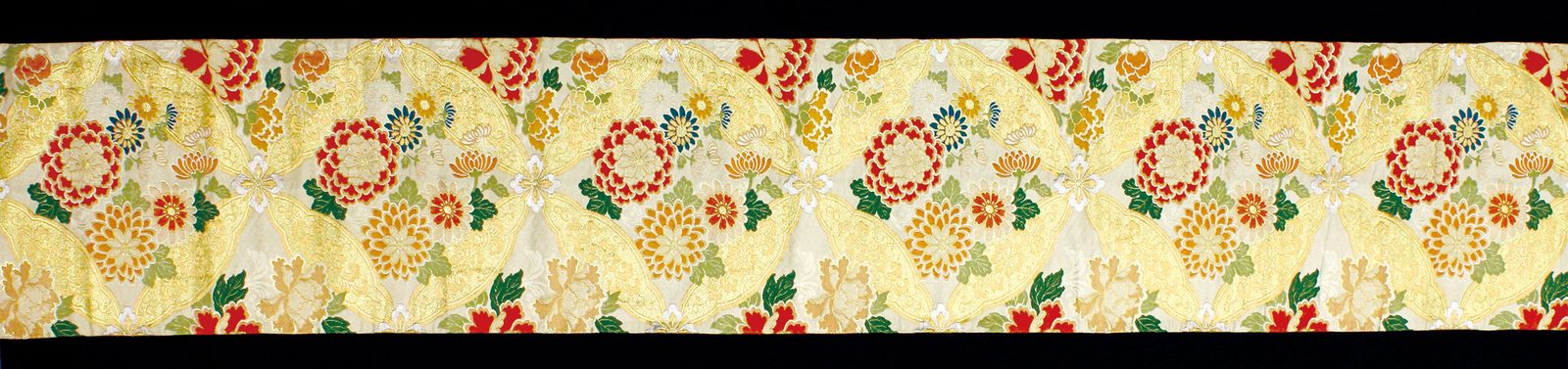
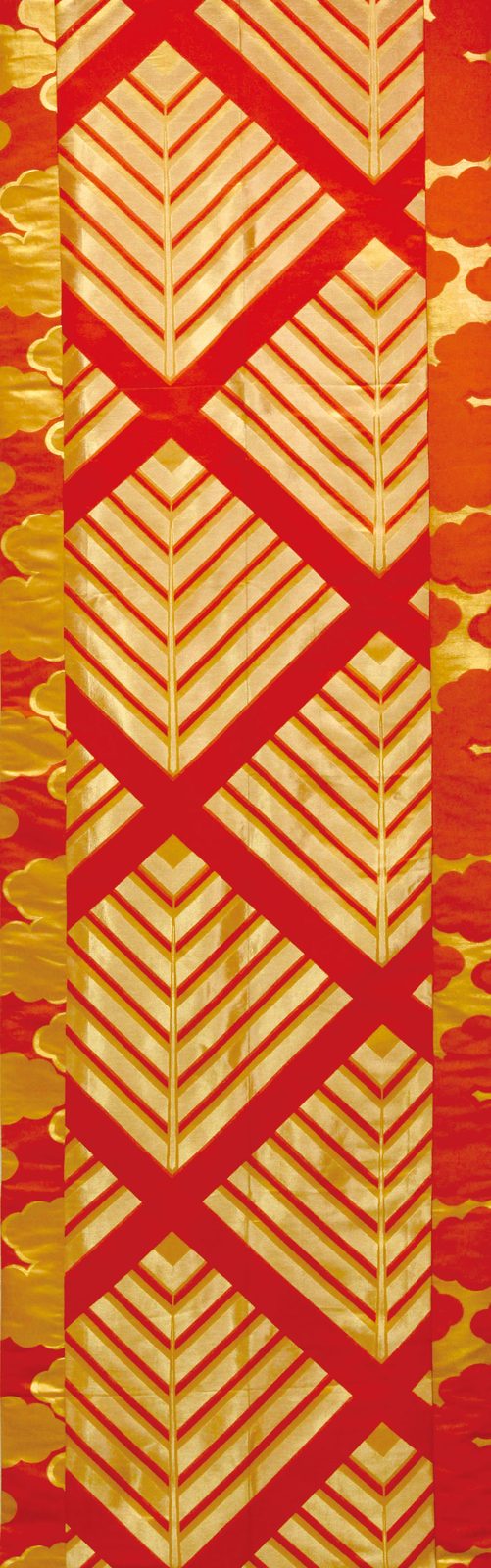
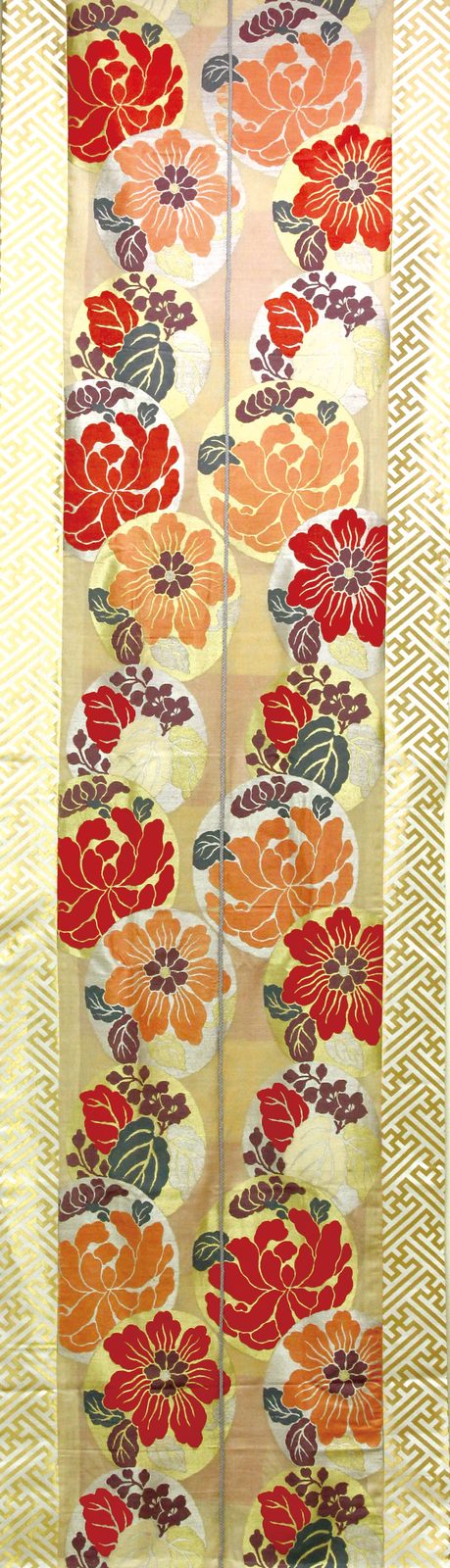
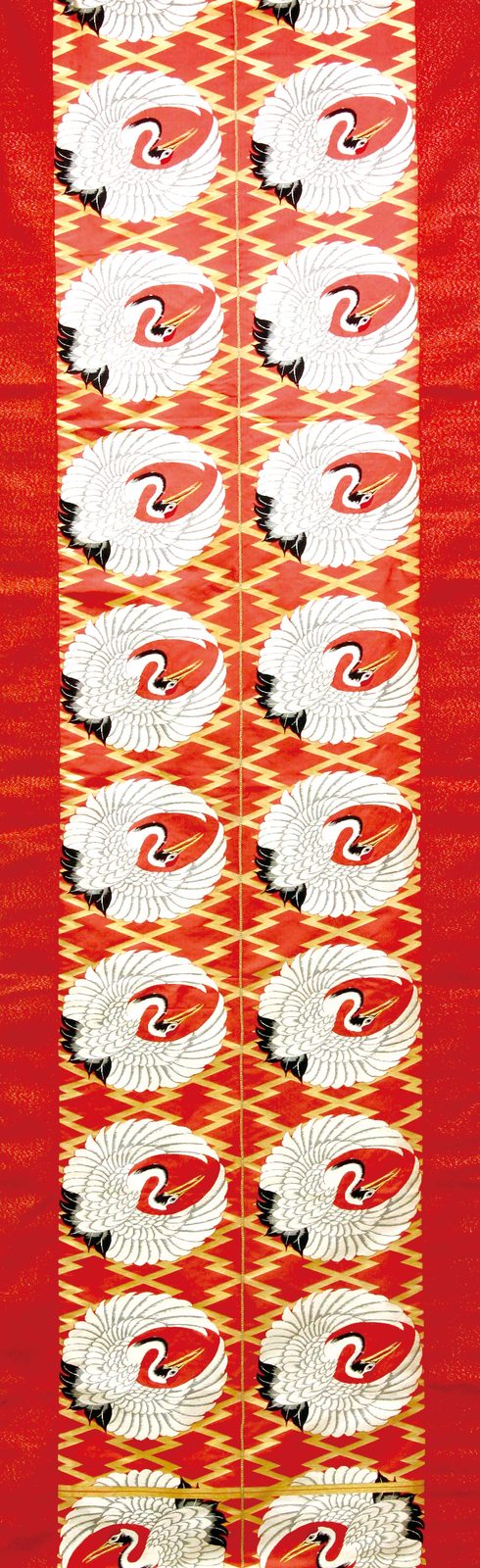
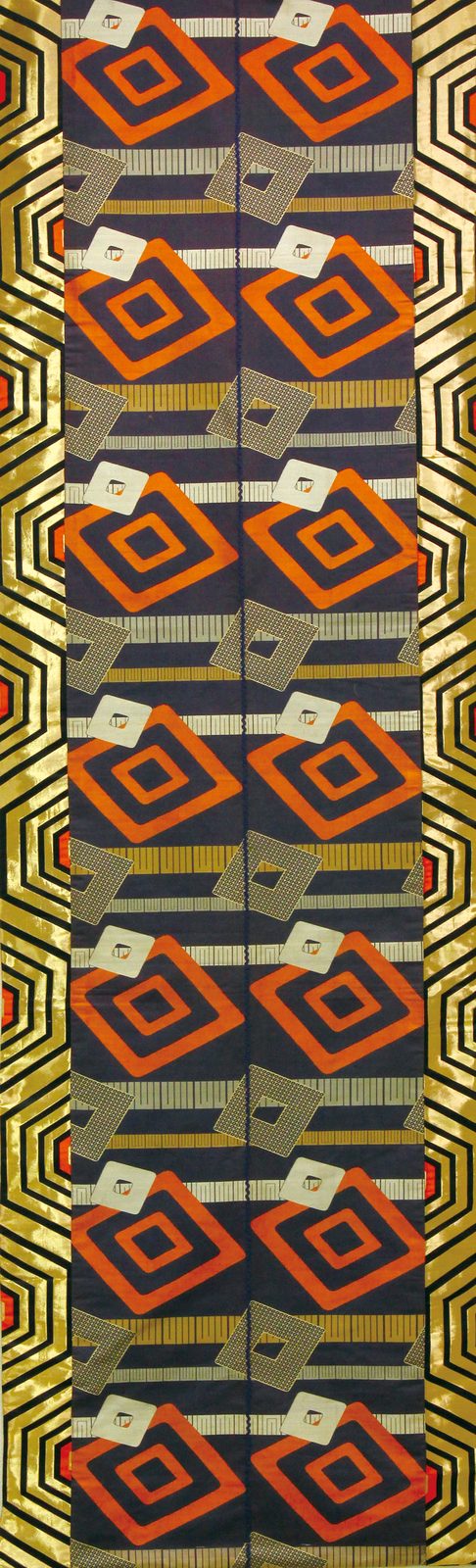
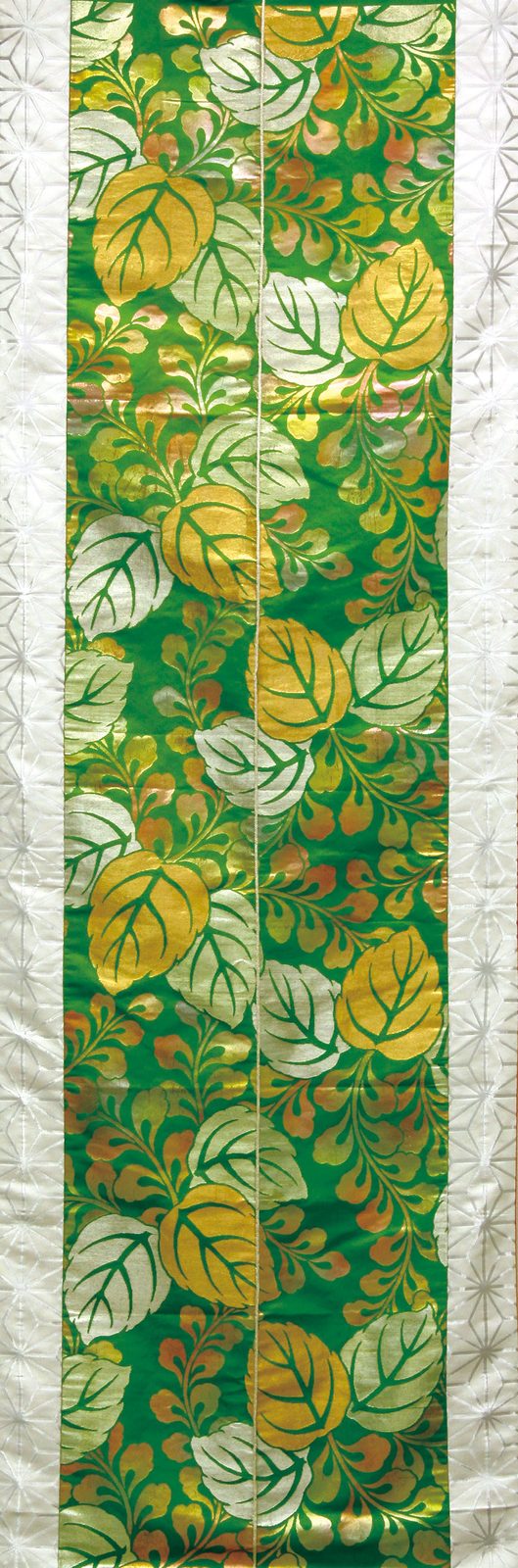
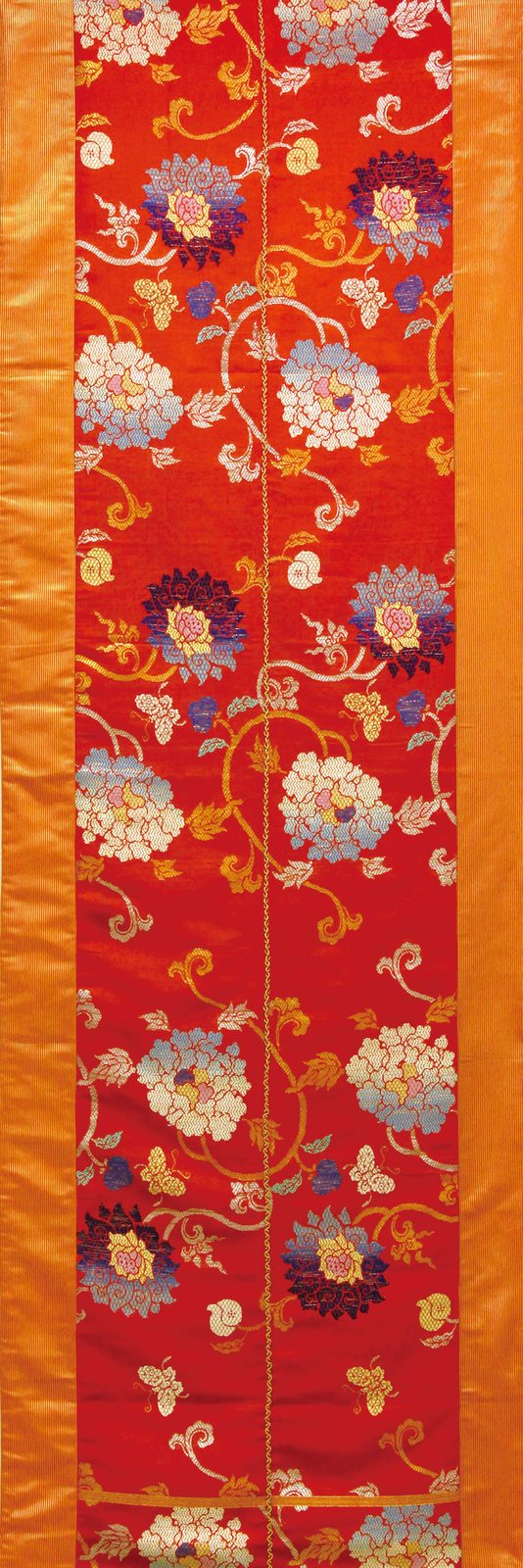
Maru-obi were the obi of ordinary people. Today no one attaches any importance to them, nor does anyone even remember them. I suspect the maru-obi has already made it onto the craft red list. I planned the Re-born exhibitions to preserve these pieces.
A maru-obi, a traditional double-width sash, is a piece of silk about 60 cm wide and 4 m long. Its pattern is designed to be viewed from all angles, so cutting it up for small accessories would ruin the design. So I hit upon the idea of turning it into a long tapestry.
Opening a maru-obi is much like preparing dried fish. You cut the seam along the sash's length, remove the threads, extract the inner core and open up the fabric. Then you wipe it clean, smooth out every crease with an iron and a pressing cloth, and hang it to dry in the shade.
Each tapestry joins two obi with different patterns, front and back, framed with a solid colour or a subdued pattern. Three obi go into a single tapestry, so an exhibition of 20 to 25 tapestries needs more than 70. The slowest part is not the sewing but choosing the three: I try dozens of combinations, and start over again and again. The tapestries are 2.8 m long, to suit ordinary ceilings.
When I spread a finished piece across the floor of my home, it revealed itself to be a gorgeous, long silk carpet. I imagined that the artisan who wove the obi in the Taisho era, a hundred years ago, must have felt the same way, turning it over and over to admire it from every angle.